Okay, so check this out—Solana moves fast. Like, blink-and-you-miss-it fast. When you’re trying to trace a token transfer, debug a smart contract call, or just confirm a stake activation, you need an explorer that keeps up. My first impression was: messy UI, too many explorers, which one do I trust? But after using a few daily, I found myself reaching for Solscan again and again. It’s not perfect, yet somehow it nails the core jobs I care about.
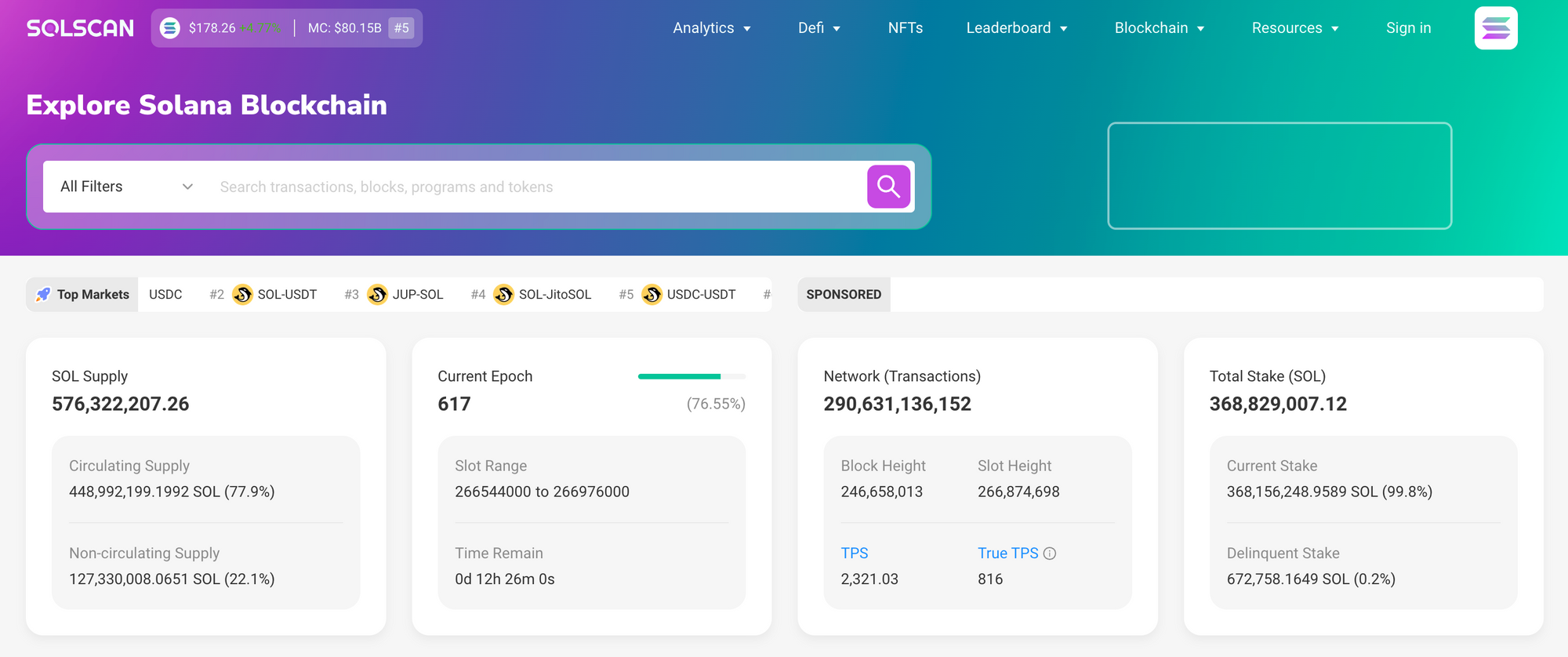
At a glance, Solscan is a lightweight, focused blockchain explorer for Solana that surfaces transactions, accounts, tokens, and program activity without a lot of fluff. I keep an eye on block explorers for both reliability and signal clarity—does the tool show what happened, why it happened, and can I act on that info? Solscan answers these with a clean timeline view, clear parsing of instruction data, and helpful token metadata. If you want to try it directly, here’s the official link to solscan.
What Solscan gets right
First, the speed. Solana blocks come in quick and Solscan indexes them without a lag that gets annoying. The transaction pages parse instruction data into readable parts—so instead of staring at hex and guessing, you see swap parameters, token amounts, and program names. That’s huge when you’re debugging or verifying a trade.
Second, accessibility. The UI balances detail and clarity—account history, token balances, and program logs are accessible without needing to be a developer. Honestly, some explorers hide too much behind “developer mode.” Solscan keeps it visible, which makes it easier for power users and newcomers alike.
Third, token insight. Token pages show holders, transfer histories, and metadata. For projects launching new SPL tokens, that holder distribution view is often the first place I go to suss out centralization risks or obvious airdrops. It’s not perfect, but it gives a clear first cut.
Where it trips up
I’ll be blunt—there are rough edges. Program logs can be terse and sometimes lack context. If a transaction involves multiple cross-program invocations, the sequence can be hard to follow unless you’re used to Solana’s CPI patterns. Also, in rare cases metadata from token mints isn’t available, which leaves token names as raw addresses. That part bugs me—especially when auditing contracts or tracking suspicious transfers.
On one hand, Solscan surfaces more than enough to understand most interactions. Though actually, wait—if you need deep forensic analysis, you still want to pair it with on-chain data pulled directly via RPC or use a dedicated analytics pipeline. On the other hand, for everyday checks and quick trust signals, it’s my go-to.
Tips for daily use (practical, actionable)
Start with transaction hashes. Paste them into Solscan and read the parsed instructions first—often that tells you the “why” before you dive into logs. If a swap went wrong, look at the postBalances and preBalances to see slippage, token decimals, and fee impacts.
Use the account history to follow fund flows. Say you’re tracking a suspicious mint—follow the wallet’s incoming and outgoing transfers, check program interactions, and map out linked token accounts. It’s basic chain-following, but the explorer makes the repetitive parts faster so you can actually think about patterns instead of digging for raw bytes.
Leverage token holders for context. Wide distribution often equals lower rug risk. A handful of addresses holding 90% of supply? That’s a red flag. Not always a rug, but somethin’ to investigate further.
Developer-focused features
For devs, Solscan’s program pages and transaction decoding are the most valuable. You can often see which program invoked another, inspect instruction data, and check compute units consumed. If your program runs out of compute, these pages give you the starting point for optimization. Also, the ability to view raw logs (when present) helps track down panics or failed assertions in on-chain programs.
One caveat: program stack traces aren’t a silver bullet. Sometimes logs omit certain debug prints if the program doesn’t explicitly emit them. So a good dev workflow still includes local testnets and verbose logging during development.
Is Solscan safe to use?
Using an explorer is read-only—you’re viewing public data on the blockchain. That said, be mindful: clicking links that lead to external sites or the “copy” buttons in unfamiliar contexts can be risky if you’re not looking. Always corroborate contract addresses via project docs or trusted sources before interacting. Again, Solscan itself doesn’t ask for keys or sign-in details; it merely displays on-chain states. Still—common sense applies: verify, verify, verify.
FAQ
What’s the difference between Solscan and the official Solana Explorer?
Both show on-chain data, but they present it differently. The official Solana Explorer focuses on core blockchain metrics and network status, whereas Solscan tends to add richer token metadata, parsed instructions, and a more streamlined UX for tracking tokens and program activity. Use both when you want cross-validation.
Can Solscan decode custom program instructions?
Sometimes. If the program publishes ABI-like metadata or follows common instruction patterns, Solscan can present readable fields. For custom or obfuscated instruction sets, you’ll see raw instruction bytes and will need local decoding logic or source code to interpret them fully.
How reliable is the holder and transfer data?
Mostly reliable—it’s indexing what’s on-chain. However, watch out for wrapped tokens, multiple token accounts for one owner, and exchanges that custody assets across pooled accounts. Those scenarios can skew holder concentration stats unless you disambiguate owner addresses.