Wow! I remember the exact moment: a popup asked me to sign a transaction that looked off. My stomach dropped. Really? I thought I had the basics locked down. My instinct said something felt off about the dApp connection, and that gut feeling saved me from a small but painful mistake. Initially I thought all browser wallets were basically the same — convenient, a little risky, and fragile around phishing. But then I tried Rabby and some things clicked in a different way, so I kept using it. Oh, and by the way… I’m biased toward tools that respect flow, not just flash.
Here’s the thing. Browser wallets are the front door to your on-chain life. Short trips, long trades, and very very important NFT mints all happen through that UI. You want a wallet that minimizes cognitive load while maximizing guardrails. Rabby leans into that balance: it offers transaction simulation and clearer prompts that help you decide fast, but also gives you the deeper controls when you want them. My early impressions were pretty intuitive — simple, safe, honest — though actually, wait—let me rephrase that… the first win was the transaction insights, which made me pause less often and trust more.
Some quick context — I’m based in the US, work with DeFi products, and have spent late nights debugging extension quirks in messy browser environments (Chrome, Brave, you name it). So when a wallet promises to reduce accidental approvals, I test it on the stuff that usually breaks: multi-step contract interactions, token approvals, bridging flows. That hands-on testing is how I separate marketing fluff from useful features. On one hand, a sleek UI matters; on the other, you need real protections. Rabby tries to be that middle ground, though it’s not perfect.
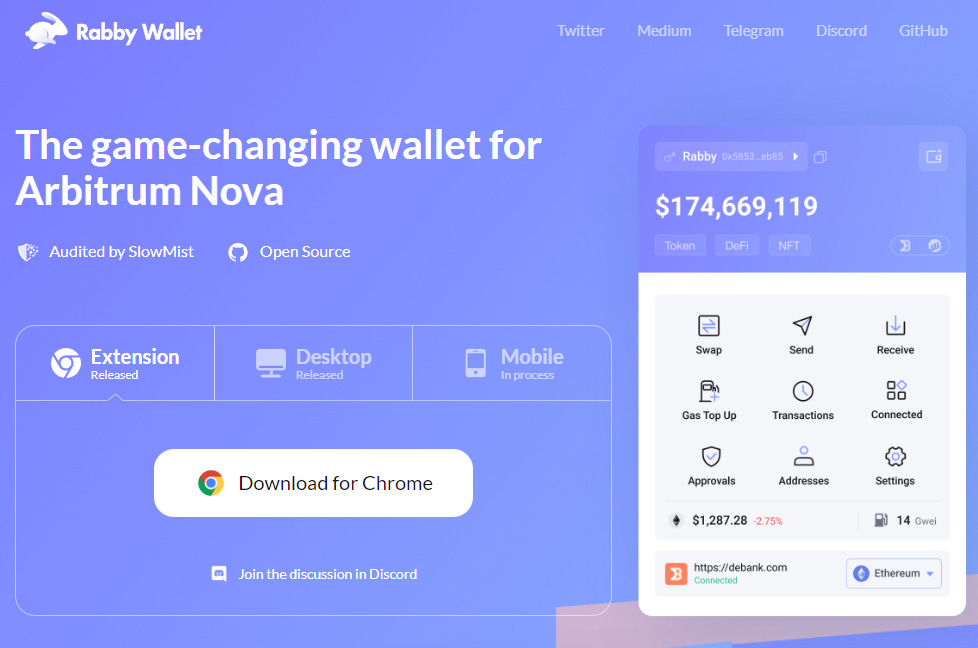
Getting Rabby Wallet and what to expect
If you want to try it yourself, you can download rabby wallet and install it as a browser extension (Chrome/Brave/Edge). The install is straightforward. The extension asks you to create or import accounts, and then it asks for typical permissions. Pause here for a sec. Seriously: read the permissions. Your instinct will matter again. Rabby surfaces a few helpful pieces of info up front — chain selectors, account names, and an emphasis on hardware wallet hookups — so you won’t be hunting for settings five minutes in.
Security highlights I appreciate. Rabby integrates with hardware wallets like Ledger and Trezor, which means you can keep keys cold while still using familiar dApps. It also provides a transaction simulation layer that shows whether a tx is likely to fail or cost more than expected, and that feature saved me from wasting gas more than once. On the flip side, some advanced flows still require a mental model of approvals and allowances, so this isn’t a one-click cure-all for sloppy key management.
Performance and UX. The extension is responsive. Switching networks or accounts feels snappy. There’s a clean accounts view and an approvals manager that helps you revoke allowances without digging through obscure menus. I liked the multi-account, multi-chain clarity — especially when I juggle mainnet stuff and testnets for dev work. Still, not everything is perfect: occasionally the UI will lag after extended sessions, or a rare dApp integration won’t detect the wallet instantly. That bugs me — but it’s a solvable friction, not a dealbreaker.
Design choices that stood out: clear labels for transactions, concise gas recommendations, and a “why is this happening?” style detail panel for advanced users. I’m biased toward wallets that educate during flow rather than punish users after the fact. Rabby aims for that. My instinct said “this feels safer,” and the data backed it up in my day-to-day use. Hmm… I found myself trusting certain prompts more than I expected, which is a subtle but important thing when mis-clicks can be costly.
Integration with DeFi tooling. For power users, Rabby supports custom networks and token imports, and it plays nice with popular dApps — though compatibility is always evolving. For aggregator traders and liquidity providers, the transaction simulation and visualized approvals reduce the need for constant manual checks. That said, if you run large, complex multi-sig setups or institutional custody, you still need specialized tooling. Rabby is optimized for individual and small-team flows.
Privacy and open-source concerns. I appreciate wallets that keep telemetry minimal and code auditable. Rabby has components that are open for review and an active community channel. I’m not 100% sure about every telemetry bit (I didn’t deep-audit the source), but the team’s transparency is a plus. If you’re paranoid — like some of my friends in Chicago — you’d still pair it with a hardware wallet and manual allowance audits. That’s how I run mine when I’m handling larger sums.
Real-world tips (practical, not preachy): label accounts clearly, use a hardware device for high-value transfers, regularly revoke unused approvals, and test a small tx when first connecting to a new dApp. Also, keep a separate “hot” account for day-to-day small amounts and a “cold” account for bigger holdings. Seems obvious, I know. But people still mix accounts and then curse the gas gods. Somethin’ to avoid.
FAQ
Is Rabby wallet safe for everyday DeFi use?
Yes, for most individual users Rabby adds sensible protections like transaction simulation and clearer approval flows, and it supports hardware wallets for higher security. Still, practice good hygiene: use hardware for large funds, revoke unused allowances, and double-check dApp connections.
Can I use Rabby with Ledger or Trezor?
Yes. Rabby supports hardware wallet integration so you can keep private keys offline while using the extension as an interface. That combination is my preferred setup for balancing convenience with security.
Final thought — not a tidy summary, just a nudge: if you value clear transaction context and easy hardware integrations, Rabby is worth a try. It won’t fix reckless habits. It does, however, make safe decisions easier and mistakes less likely, which for most of us is the practical win. I’m still poking at edge cases and will keep an eye out for subtle UX regressions, but for now I’m using it daily and it’s saved me a handful of gas and a bit of grief. Try it, test small, and see how it fits your flow — you’ll notice the difference pretty fast, or you’ll notice somethin’ that needs work… either way, you’re learning.